Sunday, April 9, 2017

THE PIGEON

Shortly after we arrived in Germany last spring, I planted a number of geraniums in flower pots to place on the railings of our apartment balcony.  The flowers grew well over the summer and fall, and when the first frost was near I (Russell) decided to move the plants inside and try to preserve them over the winter.  When I did this in Belgium a number of years ago I lost about half of my plants over the winter.  However, this time I lost only one of twenty.  Eileen and I were both glad to move the plants back outside two weeks ago as we don’t have a lot of room in our apartment.  We were one of the first in our building to put flowers out and ours were relatively quite large.

A week ago I noticed that a few of the flowers were looking rather beaten down and I thought maybe the wind had messed them up.  Then while eating lunch one day last week I noticed a pigeon on the ledge of our balcony.  I chased it away but it came back two more times.  By the time I came home that evening almost all my flowers were beaten down.  I realized that the pigeon(s) were attempting to nest in my flower boxes!  My feelings toward the pigeons were not very missionary like, which only brought to my mind President Kimball’s quoting of a poem “Don’t shoot the little birdies that fly up in the sky” as a rebuke. We have been given instructions by our landlord to not allow the pigeons to be near our balconies.The dilemma is how to get rid of the problem?

The pigeon reminded me of Goldilocks – testing out one of the plants to nest in was not enough – who had to try sleeping in all the bear’s beds.  My sympathies were clearly with the bears and not with the squatting trespasser. Not knowing what else to do I brought my flower pots back into the apartment.  I guess I will wait until we get past the time the pigeons are laying their eggs and then move them out again. 

As I have thought more about my analogy of the pigeon to Goldilocks, I find myself wondering if perhaps God views me like the pigeon or Goldilocks.  He has provided me a beautiful world to live in, a wonderful family, the fullness of the gospel of Jesus Christ, relative prosperity and good health.  And all too often I make a mess of those things in my attempt to satisfy my shortsighted “needs” or desires.  I am glad God is patient and forgiving with me, and I will try to be more so with my neighbor the pigeon.


Sunday, April 2, 2017

PROMPTINGS OF THE SPIRIT

Through the miracle of modern technology we have been able to listen to four of the five sessions of General Conference broadcast from SLC. It has been a spiritual boost for both of us. Although all of the talks had meaningful messages, I (Eileen) felt especially touched by one particular talk. Elder Rasband’s talk “Let the Holy Spirit Guide” seemed especially pertinent to the thoughts going through my mind this past week.

Wednesday morning we received notification from Elder and Sister Lindsay that they had been called to be our replacements.  We were especially pleased, as we know this couple well. Not only are they extremely well qualified but also we have a firm conviction that Heavenly Father wants them here in Europe doing humanitarian work.

This is our third mission together as a couple. During our second mission we served as recommenders for senior missionaries in the Missionary Department. The Lindsays served as recommenders in the Welfare Department. We interacted daily with them, sometimes having conversations multiple times per day. We shared an instant bond with them.  The Lindsays had served two prior missions and we loved hearing about their experiences in Egypt and the Philippines.  We ate lunch daily with them and also did some things socially with them. They laughed at my ridiculous jokes.  They told us of spiritual events in their calling.  A strong friendship was forged.  When Russell had some complications with kidney surgery the Lindsays were the ones that I turned to.   Even though we had been released from our service in the missionary department I knew they would drop everything and be there to offer comfort and support. 

We have exchanged occasional emails with the Lindsays since we have been in Frankfurt.  This past January I had a very strong feeling that I should write to the Lindsays.  While sitting in the airport one day I wrote them a long letter telling them of the love I had for them and asked them when they would be going on another mission.  That was on a Tuesday. On Saturday when we returned to Frankfurt I told Russell that I felt I needed to call them. He questioned this prompting, as he knew that I had just written an email to them just a few days earlier. Nevertheless, I called them. During our conversation I discovered that the Lindsays had been fasting, praying and attending the temple to determine what the Lord would have them do regarding serving another mission when they received my email.  Through a series of miraculous events, the Lindsays received a call this past week to serve as our replacements.  As I listened to Elder Rasbands talk today I thought about the impressions I received to both email and talk with the Lindsays.  I didn’t call them out of friendship. I called them because I “felt” inspired to do so. I truly believe that Heavenly Father wants them in this calling. I am grateful for their goodness and desire to follow the Lord’s will.  I am also grateful that perhaps in a small way I was able to help the Lord move His work forward here in the Europe Area. 

Earlier this week we traveled to Greece to help train Elder and Sister Willmott. The Willmotts first were called to Greece to be office specialists, and then they were moved to Thessaloniki to work as Member-Leader Support missionaries and also help with some of the Churches efforts to render aid to the refugees there.  A few weeks ago the Humanitarian missionary couple that was serving in Athens needed to go home suddenly due to some medical issues.  The Willmotts were asked to move to Athens just a week ago and are fill a role which primarily deals with the Church’s refugee aid efforts in Greece. As we listened to Elder Bednar’s talk about how missionaries are first called to serve and then secondarily assigned to serve in a specific location I thought of them.  The Willmott’s willingness to serve wherever and do whatever is asked of them is a great example of how we should serve.

On our return home from Greece I had a small misfortune. A man sitting behind us on the plane was reaching up to get his wife’s suitcase, and it slipped and fell on my head.  I visited a local hospital for a checkup. I am grateful that I wasn’t hurt worse than a headache and a few sore muscles.

Listening to conference yesterday and today has been marvelous. I know that we have a prophet leading our church and that we are greatly blessed to be able to hear him and the other leaders of our church speak. I am excited for the additional newly announced five temples which will be built. I have done medical work in Kenya and the Philippines, and we have a daughter who lives in Saratoga Springs.  Each of these three locations has special significance to me.

Eileen with Elder and Sister Willmott

L to R-The Ritchies (our replacements in the Missionary Dept,) Russell and I, The Lindsays (our replacements in Germany) This photo was taken at our farewell to Germany. Both the Ritchies and the Lindsays attended to show their support.

Sunday, March 26, 2017

ASSESSING MATERNAL NEWBORN CARE IN MOLDOVA

Approximately two months ago I (Eileen) was copied in on an email from a doctor in the U.S. to our humanitarian couple in Moldova.  He was interested in pursuing a maternal newborn care project in Moldova and wanted our couple to be the eyes on the ground so to speak.  The name of the doctor was the same as someone I knew 40 years ago while in nursing school. I responded back to him and asked if he happened to be the same Rob Clark who lived on the SLC avenues in 1977 and was married to Anne Clark.  As it turned out he was someone who was in my student ward when I was in college. I was in the Relief Society Presidency of that ward and his wife was the Relief Society President.  We later spoke on the phone and it was fun to catch up and hear about their family, and in turn he also asked about ours.  Many years ago I left nursing school to go have a spinal fusion. At that time,  I was released from my calling in the Relief Society Presidency and moved back to Colorado for the operation.  Rob and Anne were married, and I don’t believe I have communicated with either one of them since.  This interaction was a reminder of what a small world it is within the church.

One of the major initiatives for LDS Charities is a program entitled Maternal Newborn Care (MNC).  This program aims to teach appropriate medical skills to physicians, nurses and midwifes in countries where perhaps the training is lacking.  The programs include training the providers with training in areas such as  Neonatal Resuscitation (NRT), Essential Care for Every Newborn (ECEB), Advanced Life Support in Obstetrics (ALSO)  and, Helping Babies Breathe (HBB).  Each program is structured to have a different level of intensity to meet the varying needs of the providers in the country where training will take place. While we were in Indonesia we worked for over a year to implement an HBB program for over 500 midwives and a few dozen doctors and nurses in a rural area.  We were released from our mission just six weeks before the program was formally initiated. Although we would have loved to have seen the training, we were pleased when a picture of the doctors we had worked with ended up on the front page of our church’s newspaper (the Church News).  

 Dr. Clark has been heavily involved in the MNC program for many years and has done training programs in India, China and Nepal.  This is the first year he will be working in any European country.  He also has his own practice in addition to being on several committees. He is extremely busy. When he discovered that I was a former Newborn ICU and Labor & Delivery nurse he asked if I would be willing to visit Moldova and assess the needs there. This was a huge pleasure for me as I have missed my nursing profession immensely.  I had the support and encouragement of my manager in Frankfurt and also my husband, which was a blessing.

The history of Moldova is complicated and it has changed hands over the years from being a Russian and/or Romanian territory to being independent. Most of the people speak Romanian while some in the South and East speak only Russian.  The Russian Orthodox Church is prevalent there and it was very common to see onion domed churches with glistening golden roofs in almost every village.  Statues of Jesus on the cross are commonplace, even on the sides of the roads away from what would seem to be other signs of community. When we first rode in the taxi to our hotel I was surprised to hear the singing group BeeGees on the radio.  We soon found that American/British music from the 70s and 80s seemed to be played everywhere, and often quite loudly. 

Elder and Sister Vogelsberg have been serving in Moldova for a little over 18 months.  Elder Vogelsberg did an excellent job of navigating the roads from one town to another.  Some of the roads off the main highways were covered with potholes. He would sometimes swerve to miss them and on occasion had no choice but  to drive over them.  A portion of our journey was over dirt roads.  This gave us the opportunity to see the villages, which we always enjoy doing.  It seemed that about half of the homes had an outhouse in the yard.  I was told by our translator that many homes do not have running water, but rather obtain their water from a nearby well.  Local wells were decorated ornately with a handle and a pulley to obtain water from a bucket.  Many of the wells have become contaminated due to runoff from the fertilizers used in the nearby farming fields. There have been several clean water projects in Moldova implemented by LDS Charities over the years.

We visited six hospitals trying to get a feel for the needs of each local unit.  The hospitals in Moldova are divided into three levels.  We found that the lowest level (Level 1) hospitals were smaller with fewer patients, however their staffs still tried hard to have the appropriate equipment and care for their patients.  Unless there is an emergency, these hospitals only take patients who are beyond 36 weeks gestation, with Level 2  hospitals taking patients from 32-36 weeks gestation, and the three large Level 3 hospitals looking after the more critical obstetric patients and neonates.  Dr. Clark had asked me if I would be willing to visit a few of the smaller local hospitals to learn more about the need for training, if any, in the rural areas.

We found that the hospitals were clean, with much of the necessary equipment needed for care of the mothers and newborns. There was one location where the  director of the hospital was a little skeptical and was reluctant to give us information or allow us to see his units. In all of the other five hospitals the doctors seemed proud to tell us about the care they were delivering and more than willing to show us both their Labor & Delivery and Newborn Care units.  In one location the neonatologist had posters lining the walls of her unit. These posters were algorithms about what to do in case of an emergency.  In this particular hospital they were in Russian.  We were pleased to see the LDS Charities logo in the corner of the poster. This doctor had attended an NRT seminar/training sponsored by LDS Charities in 2011, and is still using the training manikin and written training materials which were given to her.  This was great news for us as the whole purpose of the program is to “train the trainer,” then have the trainers reach out to do training in their communities. 

We do not know at this point if or what kind of program will be implemented in Moldova.  That decision will be made by Dr. Clark when he visits in May.  We did have multiple requests for NRT, HBB and maternal emergencies training by the physicians.  For me, it was extremely satisfying to be back in a hospital again.  I was grateful for my good husband and companion who not only took notes for me while I interviewed the staff, but also is savvy enough that he could prompt me in certain situations to notice something which had gone unnoticed earlier.  In one instance we were told by the director of the hospital that many deliveries were done with forceps rather than a vacuum suction. While in the delivery room, Russell asked me what a certain piece of equipment was. It turned out it was the vacuum suction machine. When I questioned the obstetrician as to whether forceps or vacuum suction was used in their deliveries she looked in shock at us and said “ NO FORCEPS!”  I was grateful for this good catch by my husband, the accountant.  I also appreciate the efforts the Vogelsbergs took to transport us around and give us their insights. Our interpreter, Doina was extremely valuable.  She is a member of the church (only one of about 100 who are actively involved in the church in Moldova).  She  speaks Romanian, Russian and English fluently, and didn't hesitate with any of the medical terminology. Her services were very needed as the only individuals we met in our travels who spoke English were  a family in one of the patient rooms. The mom had just given birth the previous day and her husband and nine year-old son were there visiting. Interestingly they all spoke English.  We admired their beautiful baby and congratulated them on their new addition.  Families with multiple children seem to be something we don't see often in Europe, other than in Moldova.

I was grateful for the opportunity to be involved in a small way with this future MNC project. I am hoping that perhaps it might take place before our departure next fall.  Maybe we would be able to meet again some of the good people we met on this visit.
Russian Orthodox church under construction

You would normally only see one of these cars in the movies

Russell correctly identified this as being the "vacuum suction"

Doctors, Elder and Sister Vogelsberg and Eileen, neonatologist holding manikin from prior LDSC training
Notice the LDS Charities stamp
Algorithm for emergencies in Russian

Emergency supplies 
Neonatologist with baby manikin used for training purposes
This family with their new baby all spoke English
Emergency supplies in NICU
Our translator Doina in black coat talks with obstetrician and neonatolgist in Russian
Once a grandma, always a grandma. I loved the newborns
Doctors and missionaries in one of the NICU units

Sunday, March 12, 2017

REFLECTIONS ON ROME

Eileen training Elder Herway on our computer humanitarian system
This past week we traveled to Rome to train Elder Tom and Sister Anita Herway.  If you have read our previous blog postings you might be aware that the Herways were in our ward in Belgium 16 years ago.  Elder Herway was the Bishop of the ward and I (Eileen) was the Relief Society President. Sister Herway was the seminary teacher for our teenagers.  We have only seen them once during the years following our return to the United States. Last August, while attending the Hague temple, we ran into the Herways again. It was a wonderful reunion in many ways. We all felt like the meeting was more than coincidental. The Herways had come to the temple praying and fasting to see if they felt any specific promptings before they submitted their missionary papers the following week. We were aware of a newly opened position in Italy to serve the refugees coming across the Mediterranean Sea from North Africa.  Since Elder Herway spoke Italian and both have had years of experience working with the refugee population in Belgium, we felt that this position would be a good fit.  As it turned out, a couple of months later they received a formal call to serve in Italy with a specific emphasis on refugee aid.

There were several occurrences during our brief time in Italy which reminded us of the tender mercies which are part of our lives. 

A few weeks ago we heard that Alitalia was on strike and some of our humanitarian couples would not be able to fly on their scheduled flights from Madrid to return home. At that time I spent a great deal of time Googling “strikes in Italy”.  One warning which came up on several internet sites was that a transportation workers strike would occur on March 8th.  That was the day we were planning on traveling to Italy.  I contacted our church travel agency to determine if our flight was still on. They didn’t have any information that it had been cancelled. After some consideration we changed our tickets to fly out late Tuesday night.  Wednesday, traffic in Rome was a nightmare. We were very grateful that we were able to spend the time training the Herways instead of being stuck in traffic (or worse, perhaps not even getting to Rome).  Wednesday evening we were planning on visiting one of our NGO partners who has initiated a mobile health clinic.   Due to the transportation workers strike we thought we would have to drive downtown to visit the clinic.  At the last minute Sister Herway suggested that we try and ride the metro.  Amazingly enough, despite the strike that day, the metro was going to be running from 5 PM to 8 PM only – just enough time to allow us to travel downtown on the metro, see the mobile clinic as it opened at 7 PM, talk to some of those working with it and then catch a returning train just 8 minutes before the time the metro strike resumed.  We felt very fortunate as traffic was so heavy it would have taken us a significant amount of time to drive.

The clinic we visited was operating by a group called MEDU (Doctors for Human Rights). LDS Charities (LDSC) has partnered with this organization for several different projects. LDSC participated in the purchasing of a converted motor home which could be driven to various different locations.  A variety of volunteers staff this mobile clinic including several doctors. The clinic serves the refugee population and also the homeless.

On Thursday we visited the MEDU Psyche Center. This center provides psychological and psychiatric support to individuals who have survived torture, inhuman and degrading treatment.  From the MEDU website we read, "The project beneficiaries are men and women, of any juridical status, with no distinction whatsoever, who suffered torture or other cruel, inhuman and degrading treatment."  Services offered at this clinic are:

Psychological assessment
Psychotherapy and medical therapy
Referral to public health services if necessary
Medical, social and legal advice (housing, job training, counselling, social and legal assistance, community integration, etc.)
Collecting patient's stories
Research and training on intentional violence and psychological trauma

LDSC is partnering with MEDU to provide a clinic with more space for counseling to be done with the refugees in need of assistance of a psychological nature. While visiting the Psyche Center we met doctors, psychologists and a cultural mediator who was himself a former refugee. The cultural mediator is there to help translate for the refugees and to help offer understanding of their needs.  

The Herways, Russell and I all felt really good about our visit to this clinic.  I was able to ask about various methodologies of treatment for PTSD (Post Traumatic Stress Disorder).  I was extremely impressed with their efforts to determine what services will be of most benefit to the beneficiaries. What a wonderful effort is being done to help those individuals who have suffered violence or psychological trauma.

Several weeks ago we were communicating with President Pickerd who is the mission president of the Italy Rome mission regarding the Herway’s housing and office needs.  He invited us to a missionary zone conference on Friday for the Rome West Zone.  When we set up our training schedule several weeks ago we did not know that the Herways were supposed to be attending a zone conference or even what zone they would be in.  We attended the conference and I was very delighted to see my nephew at the conference.  Elder Ethan Cannon has been serving in Malta with 3 other Elders and a senior couple.  Who would have thought that Malta would be in the same zone as missionaries serving on the west side of Rome?  Perhaps it was more than coincidence that the Herways were serving in the same missionary zone as my nephew.  We tried hard to make sure we were not a distraction to him or the other missionaries, however President Pickerd did suggest that we take a photo together.  It was wonderful to be able to hear the excellent training by President and Sister Pickerd and to feel the great spirit of the young missionaries. 

We returned to Frankfurt after a great week emotionally recharged but physically tired. Galatians 6:9 says “And let us not be weary in well doing: for in due season we shall reap, if we faint not.”  We both feel that this last week we were able to “reap,” despite our falling asleep on the flight home.  We are grateful and feeling very blessed to have the opportunity to help with the humanitarian work in the Europe Area.  


Russell in training with Elder and Sister Herway
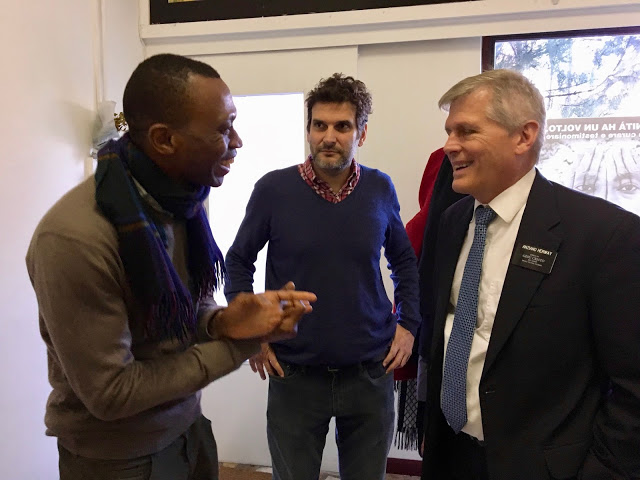
Elder Herway and Russell on metro - we were so grateful it was operating for a few hours

MEDU clinic in Rome

Sister Herway exchanging contact information with volunteer

Rome temple under construction

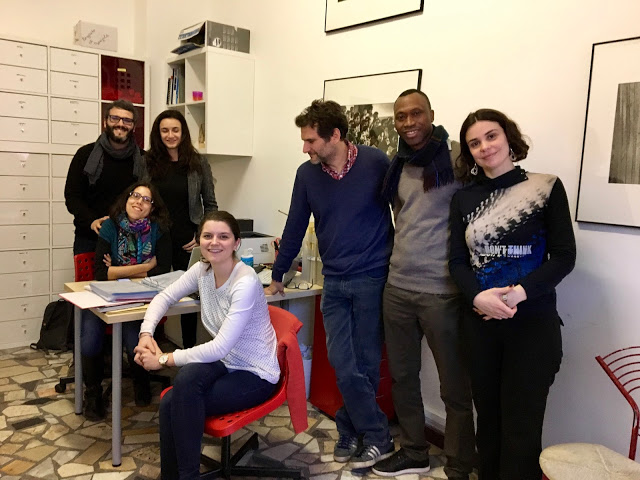
Volunteer intern, cultural mediator and Alberto (physician and organizer of Psyche Clinic)

Professionals and volunteers at Psyche Clinic

Elder Herway and cultural mediator discussing music therapy-They both have been in rock bands

Poster at clinic - this young man was a refugee from Africa, now translator and cultural mediator

Eileen and her nephew Elder Cannon

Elder Cannon and fellow missionaries, Elder Adepoju 2nd to left has a remarkable story of his leaving the Ivory Coast as a refugee. Now he is a missionary
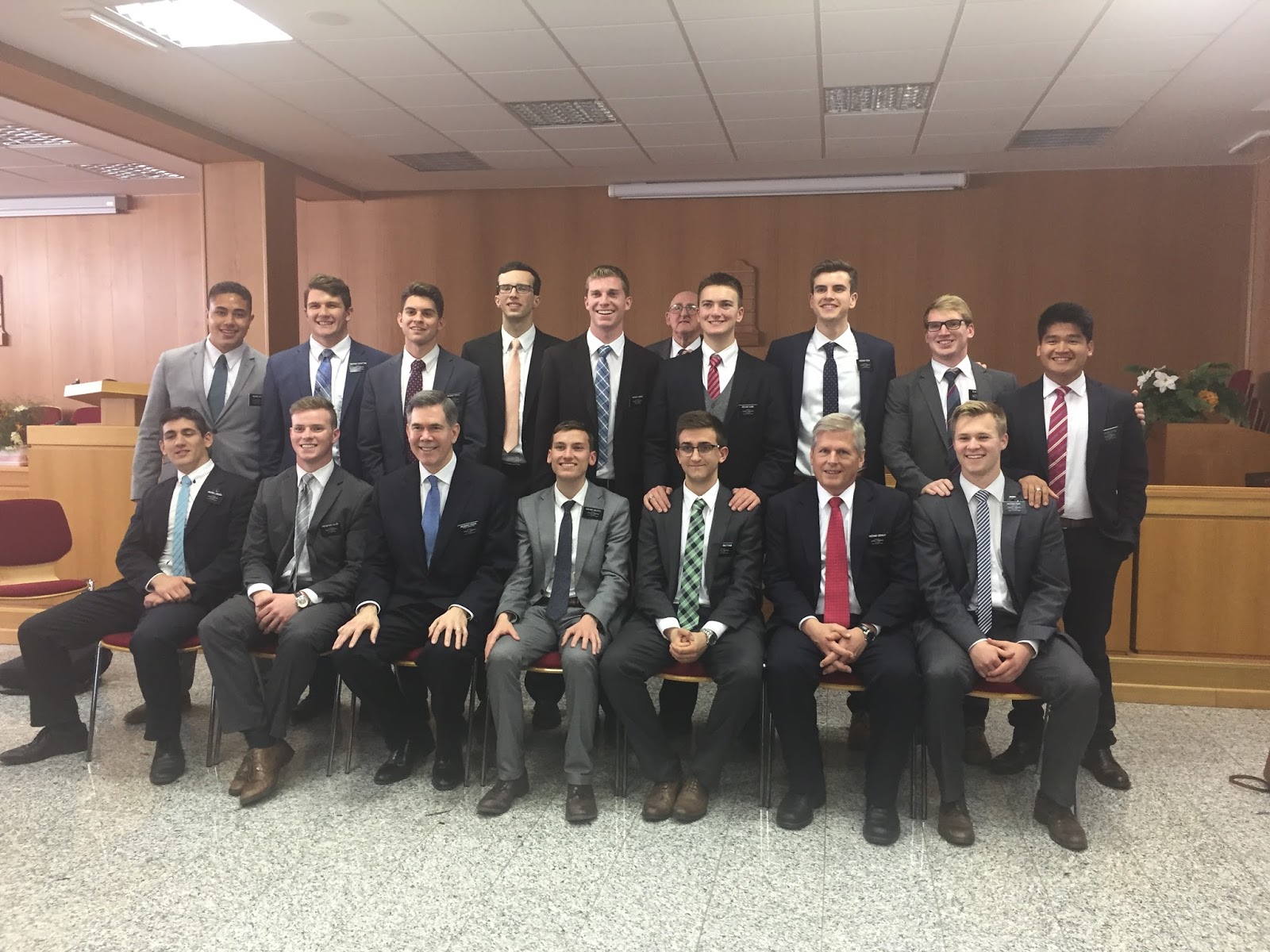
The Elders of the Rome Italy mission

Sister missionaries in the Rome mission

Sunday, March 5, 2017

DEVELOPING A LOVE FOR CAPE VERDE

After our conference in Madrid last week we traveled directly  to Cape Verde to train a new couple, Elder and Sister Gerritsen.  The Gerritsens arrived just a few weeks ago. They both have talents which will make them valuable to the work in Cape Verde.  Sister Gerritsen served as a young sister missionary in Brazil and speaks Portuguese fairly well. Elder Gerritsen has worked as a vision specialist.  We are hoping that perhaps sometime in the future a vision project might be able to be initiated by the Gerritsens within their mission.

I (Eileen) always make our travel arrangements. I started eight weeks ago trying to get airplane and hotel reservations to go to Cape Verde. It was really difficult to find availability.  As it turned out we were going right during the middle of “Carnival,” which is a huge holiday in Cape Verde. 

The Gerritsens are living on Sao Vicente in the city of Mindelo.  They will also be covering other islands in the northern half of the Country.  Cape Verde is a chain of islands 300 to 400 miles off the west coast of the Mauritania-Senegal (Africa) border.  The official language is Portuguese, with Creole spoken in the homes and amongst friends.  We found that the people of Cape Verde consider themselves more like the Portuguese than the Africans.  In fact the temple district for Cape Verde is Portugal. Many newly called missionaries travel to Brazil to attend the MTC and the temple.

Mindelo Harbor
Santa Antao
It was interesting to note how much my attitude towards this little country changed during the week.  My first couple of days I was feeling so badly for the Gerritsens, grateful that I was serving in Germany. Today as I travel back to Germany I recognize the love that I have developed for this sweet group of people and for their rugged, arid country.

 Because all of the hotels were booked in the town of Mindelo, we stayed out by the airport; a drive of about 20-30 minutes.  On Sunday morning we took the free hotel shuttle into town.  We were told that the shuttle driver could drop us off near the church which was on his way.  The bus was full of tourists in beachwear and we were in our church clothes. The driver didn't speak any English. He drove into town and pulled up in front of a white church with a cross on the top to let us off. Russell and I both looked at each other thinking to ourselves, we are in big trouble!  We had been told to look for “the green church with graffiti.” This church was white and obviously not ours.  The directions given us were that after we arrived at the church we were supposed to then walk to the Gerritsens apartment, which was around the corner and “in front of the house with pigeons.”  We had heard that it was very difficult to find locations in Cape Verde due to the lack of formal street names and addresses, but this gave new meaning to the challenge.  We got off the bus and started walking. We were the only white people on the street, didn't speak the language and my phone wasn't working as it was out of roaming minutes.  We walked for about 25 minutes looking for any building that looked even remotely green.  I was praying, pleading with the Lord that we could figure out where to go.  We saw a gas station and I went in and asked in Spanish if anyone knew where the Mormon Church was located.  A man responded in French and I switched to French. He said he would point to where the church was. As he walked outside with us he switched to English and said he would walk us to the church.  He said his name was Rui and he was a member of our church, although obviously not intending to attend that day.   I was thrilled to find Rui!  What a tender mercy and a direct answer to prayer.  When we found the church I was so grateful for Rui’s help. It would have been impossible to find on our own. 


The church congregation was small however everyone smiled and was friendly.  An electronic organ was playing pre-recorded hymns. I asked if they wanted me to play. The bishop was happy to have a pianist. Apparently there isn't anyone within the ward that plays.  After church a number of children gathered around the organ looking at the magical way the organ made music when my fingers moved. There was a wonderful spirit at church, although by the end I realized how fortunate we are to have church meetings in English. It definitely is difficult to attend three hours of meeting not understanding any of the words which are spoken.


The LDS church in Mindelo

Boys from branch learning I am a Child of God from Eileen

Sister Rice has been serving in Cape Verde and received her first letter-she was ecstatic

Bishop Neves (center), Paulino Russo,-the two young men are returned missionaries engaged to be married this summer. They have just started washing cars to earn money with a newly formed Member Welfare project 
 On Sunday, Monday and Tuesday we did our normal humanitarian and computer programs training.  Tuesday evening we went to town to have dinner.  The town was packed with people-both foreigners and locals dressed in crazy wild costumes.  I have always thought of Carnival as something kind of risqué, which this particular celebration was not.  This seemed to be a combination of Halloween and the 24th of July parade in Utah.  The huge Carnival parade with floats was to be held on Wednesday, however by Tuesday night the floats were starting to line up, people were waiting along the streets and families with children in different costumes were waiting along the parade route.  It was fun to see the families doing something together. They were obviously enjoying themselves. Vendors were out on the street barbecuing chicken, selling drinks and nuts. It was quite festive. We just drove by in our taxi after our training rather than watching the parade. Our taxi driver stopped and took a few pictures for me. 

Watching the parade

Aladdin float at Carnival
Chicken being barbequed on the street
Wednesday we took an early morning ferry over to a neighboring island named Santo Antao.  The Gerritsens had arranged for some appointments with potential NGO partners.  The first location we went to was a hospital on the island. We were met by a gentleman that apparently did fundraising for the hospital.  His requests were for money and consumables (like syringes), neither of which were items which LDSC Charities could provide.  We inquired about other needs, but he seemed pretty determined as to what he was hoping we would donate. While at the hospital I wondered what would happen if you had a real medical emergency.  On the return ferry we found out.  There was a young man on a gurney, an IV in place and a neck collar on. He was being transported to Sao Vicente.  My heart went out to him as it looked as if he was either heavily medicated or comatose. 


Russell and Elder and Sister Gerritsen on ferry
It was a 90 minute drive to our next appointment. We went over the top of several mountains.  The drive was unbelievable.  The road was cobblestone the whole way.  We climbed 6400 feet until we overlooked a volcano cauldron and beyond to the coast and ocean below.  During our drive we saw people walking up or down the mountain, some barefoot.  I wondered where these local’s final destination was.  To walk from the village to the top of the mountain would have taken most people several days.  We saw no stores or water sources.  Cape Verde is very arid getting very little rainfall.  The mountains are terraced. Unlike Indonesia’s terraced hills with an abundance of greenery, these mountains were rocky and dry.  Stones were lined up on each terrace.  Children played literally on the side of the mountain.  Several came out to watch us drive past and waved.  I wondered how these people survived.
This man was at the dock with an LDSC wheelchair, he said he was a member of our church
Village on Santo Antao

Houses built into the hillside
Anyone want fish?

Steep, dry mountains
Women can be seen with all sorts of loads carried on their heads

We met Elton, a teacher for one of the schools in the mountains.  Elton had a small request by US standards.   He wanted two sinks and 2 toilets for his school of 24 children and similar facilities for another school in the area.  Elton’s school is a 1&1/2 hour drive from his home in one of the three main cities on the island.  He goes to school on Monday and stays until Friday and then comes home.  The other school was an additional one-hour walk from Elton’s school. At neither location was there any running water for the school or in any of the homes where the students lived.  Elton explained that it was difficult not only for the children but also for the teachers to learn under these circumstances.  Elton is a returned missionary of our church who knows several languages fluently.  He is the ideal example of someone who is trying to give back to the community.  He married a girl he met at a single young adult conference in Cape Verde and now they have a 3 year old son.  We were so impressed with Elton’s efforts, attitude and story.  While providing bathroom facilities in a location where the water source is difficult, we hope that somehow the Gerritsens will be able to help the children in Elton’s small school up in the mountains.
We were late for our appointment so our meeting with Elton was in our taxi (Elton in yellow)

Interesting but good-papaya jam with goat cheese

Sun setting over Cape Verde
As we returned back to Sao Vicente on the ferry I remarked to Sister Gerritsen how fortunate I felt to be able to visit her in such a remarkable place. The living conditions are hard, the language is challenging, the food very different, mail delivery is almost non-existent, but what an adventure!  In a 24 hour period of time we had seen Carnival, driven to the top of a mountain, taken two boat rides and eaten two fresh fish dinners.  We had become friends with several of the locals and even invited our cab driver to join us for a meal. The people are warm and welcoming.  Russell and I really enjoyed our visit.

We went back to our hotel to find over 30 emails awaiting us (just from one day), with several issues that needed to be addressed immediately.  We were both so grateful for this opportunity to visit Cape Verde.  A general authority from our church, Elder Joseph B. Wirthlin delivered a conference address a few years back entitled “Come What May and Love It.”  He happens to be Sister Gerritsen’s father. The people of Cape Verde and the Gerritsens don't have all the seeming necessities of life, but they appear to epitomize being happy regardless of their circumstances.

(Russell’s note) Eileen mentioned how we met Rui on the street while trying to find the church building.  During our visit we also met three members of the church working at the hotel where we stayed, and a taxi driver we flagged down on the street turned out to be a member.  The young woman who checked us out of the hotel did not say much but she discreetly showed me her CTR ring.  It was a good reminder to me to that people are watching me and that I need to act accordingly.  In Germany, if I keep my mouth shut, it is possible to almost blend in.  Not in Cape Verde!  Between the white shirt and tie, skin color, and missionary badge almost everyone knows who you are and they notice how Christian your words and actions are.


Sunday, February 26, 2017

COUPLES'S CONFERENCE IN SPAIN

This last week has been an eventful one in which we have seen our efforts of several months work come to fruition.  On Wednesday and Thursday we hosted a conference for the Welfare/Humanitarian senior missionaries of the Europe Area.  We had 14 couples join us in Spain for training and attending the Madrid temple.  We were also privileged to have Elder Gary B. Sabin (second counselor in the Area Presidency) and his wife instruct us and attend the temple with us.  The idea for this conference originated with Eileen last fall.  I didn't think it would ever get approved, and was proven to be wrong for a second time during the month of November (last year) about something that I said would never come to pass.  As I look back on the conference several things stand out to me.  I will relate just a few.

Last fall during the first Area Welfare meeting we attended, Elder Sabin asked us “what keeps you up at night.”  We both replied with the same answer.  It was our mutual concern over the isolation that most of our couples have to deal with in their assignments.  By design our humanitarian couples are in countries that are economically challenged and where the Church is not well developed.  One of our couples, Elder and Sister Olson serving in Montenegro, are the only senior couple serving in the country.  Other than four young missionaries and one expat family employed by the U.S. embassy, you can count the number of members of the Church on your fingers.  Our hope was that this conference would renew the spirits of the missionaries.  Last Saturday morning when we got an email from Elder Olson telling us that he had been informed by his ticketing agent that their return tickets from Madrid had been canceled we were very concerned.  They were away from home (Podgorica) working with their mission president and did not have the time or “minutes” on their phone to make the needed flight changes.  Eileen spent much of the day trying to make alternative flight plans for them.  Only late in the afternoon did an employee from the airline tell her that they were anticipating a strike and that the entire flight had been cancelled.  That only further caused us concern as we had two other couples on that same return flight through Rome. While the other two couples were able to make other flight plans, despite Eileen’s best efforts, we were not able to work things out so the Olsons could attend.  Eileen took it quite hard.  She had worked so hard that day trying to make alternative arrangements and worked for months on the conference; her disappointment at not being able to have all the couples there was great. Looking back on the situation now and comparing it to our life and children, I think how disappointed I will be in the next life if my family can not all be together.

I was very pleased to see how well the couples not just interacted but seemed to bond together at the conference.  To listen to them at dinner you would think they had known each other for years.  Other than in our monthly video conference calls the coupes had never met before.  Eileen and I joked that if we shut our eyes and just listened to the voices we could easily identify who was who, but for the other couples this was their first opportunity to meet and talk with their counterparts in neighboring countries.  One sister commented about how refreshing it was to talk to someone in a similar situation and compare experiences.  She said it was comforting to know that her feelings were validated by others dealing with similar challenges.  The missionaries also exchanged ideas and learned from one another.  In business we referred to this as sharing “best practices.”  I came away from the conference thinking that the coupes now not only had Eileen and I to call when they have issues but that they could and would call each other.  All-of-a-sudden, the phone number and email address list that Eileen updates and distributes to all the couples every few months is in demand.

During a missionary couple’s first week at the MTC they go through basic training known as “Preach My Gospel.”  A significant portion of this focuses on teaching investigators or inactive members aspects of the gospel.  You teach with your companion, and for many couples that is a challenge.  Our first experience five years ago was enlightening.  Eileen and I had functioned for years together with a divide and conquer game-plan; be it with caring for the children, our respective professions, home or church duties.  When it came time to role play teaching the missionary lessons - let’s just say we had different teaching styles.  While I think I was better at working with her during our second time in the MTC it was more just a matter of one of us giving in as opposed to our working well together. When asked the first day of our third time through the MTC, what did I wanted to get out of the week, I said to get along well with my wife!  

On our second day of the training in Madrid, Eileen and I taught the group on what makes a good humanitarian project.  For an hour-and-half we went through a dozen old projects, case-study type teaching style, with the couples.  Each of the old projects had been selected by us to highlight certain points.  We alternated leading every-other case and adding comments when appropriate on the other’s projects.  I actually think we worked together well, neither one leading with both supporting the other.  Perhaps after five years of working/serving together I have learned something about working with my eternal companion, something more important than just expertise in our particular missionary calling.  I know I am a slow learner but I want to learn. I believe that with lots of time and submitting my will to God’s will for me, there is hope.

I (Eileen) would like to add my perspective on some of the events of this week. It seemed like Russell and I really worked as a team to make this conference a success. There were definitely some stressful moments and I appreciated his love and support when those times came.  It was wonderful to be able to meet couples whom we have previously only talked with on the phone. We also were able to be reunited with some of the couples we have trained upon their arrival in the mission field.  It was so heartwarming to see the couple's interact with each other and make new friendships. It reminded me of the Book of Mormon story in Alma17:2 where Alma was reunited with his brethren after many years of serving as missionaries. The scripture states that "Alma did rejoice exceedingly to see his brethren".  It was such a blessing to have this privilege of being together.

When Sister Sabin spoke to us she related a story about Elizabeth McCune.  In 1868, Brigham Young closed a conference in Nephi, Utah by reading the names of a number of men, who were to take their families and relocate to settlements some three hundred miles south along the Muddy River.  When Elizabeth heard her father's name she began to weep.  Her friend said, "Why are you crying? My father has been called too, but you see that I am not crying because I know he won't go." Elizabeth looked directly at her friend and said, "That is just the difference.  I know that my father will go and that nothing will stop him."  As Sister Sabin was relating this story I thought of our couple missionaries.  Each one had heeded the call of a prophet to serve where they were called.  Each left the comforts of home and family to labor in locations and circumstances that are far less than ideal. Elder Sabin used the hymn "Let Us All Press On" as the basis for his remarks. As I thought about his comments and the words of the hymn, "Fear not, . . . Courage, for the Lord is on our side" and "the Lord alone we will obey," I realized I need to both be more obedient to God's direction and then have faith that all things will work out.  All too often I find myself fearing about or worrying over the everyday challenges of life when I should be more thankful to God for my many blessings and trusting in Him.  I do love my Lord and am grateful for His tender mercies in my life.


Humanitarian Couples, Gilles Francois and the Sabins at Madrid Temple

We saw this building as we were driving from one location to another-very different from the current policy of the U.S.


Sister Sabin speaking

Elder Sabin speaking
Humanitarian couples during presentation


Eileen and Russell in front of Madrid temple


Madrid temple

Some of the couples ready for dinner
Senior sisters name tags representing the Europe Area